Introduction
First decide whether the situation belongs to the record or the field
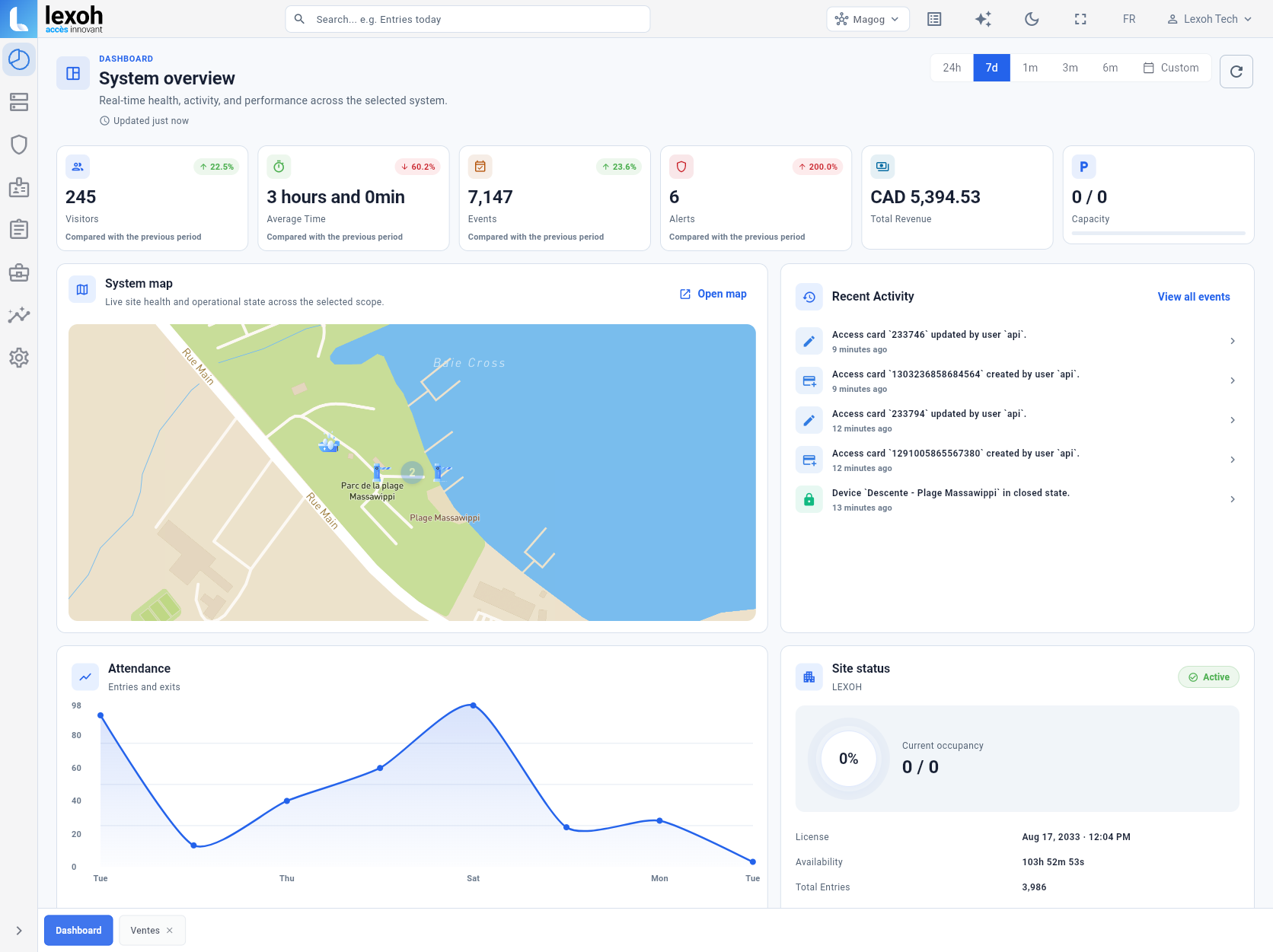
One platform can provide a view across multiple access points, stations, or gate kiosks. Authorized teams review available status, support requests, and relevant events. That visibility supports coordination; it does not by itself confirm the site’s physical condition.
Escalation matrix
What the centre can handle and what must return to the field.
The service scope determines which actions are actually permitted. A safety or emergency situation always follows the applicable procedures and authorities.
| Situation | Remote handling | Local response |
|---|---|---|
| Registration, payment, or access denial | Guide the user, check authorized context, document | Respond only when the issue is physical |
| Suspected outage or abnormal state | Check signals, open a follow-up, notify | Inspect, secure, and repair the equipment |
| Stationary vehicle or forced gate | Review the alert and apply the approved escalation | Clear, secure, or document under the assigned role |
| Possible fall or collision | Verify promptly and alert under the procedure | First responders, site owner, or emergency services |
| Maintenance, snow removal, and consumables | Schedule and track the request | Perform and confirm the work on site |
1 — Operating model
Assign requests before they arrive.
The plan describes service windows, call categories, priority levels, and people to contact. A registration question, disputed payment, access denial, suspected outage, and emergency do not necessarily follow the same path.
- User assistance
- Authorized record review
- Equipment diagnosis
- Physical response and emergency
2 — Support centre
Resolve remotely what genuinely belongs to the service.
Within the agreed scope, the Lexoh centre can guide users, check available context, document intervention, and notify the designated owner. Authority remains limited by role, customer policy, and approved procedures.
3 — Assisted alerts
Treat a detection as a signal requiring verification.
AI infrastructure can flag a stationary vehicle, possible fall, attempt to force a gate, possible collision, or abnormal movement. These signals can be wrong and require human review. They do not replace safety monitoring or emergency services.
4 — Escalation
Connect each situation with the right local responder.
After review, the centre follows the agreed procedure: further assistance, notice to the manager, technical response, on-site resource, or emergency service. Contacts, thresholds, and expected timing are set before the season and reviewed when a site changes.
5 — Network
Compare sites without erasing their differences.
A network can share a platform and some policies while retaining equipment, hours, owners, and fallback procedures for each access point. Documented profiles for Témiscouata, Memphrémagog, Lac Mégantic, and Lac Taureau show why the inventory should remain explicit.