Multi-lake networks
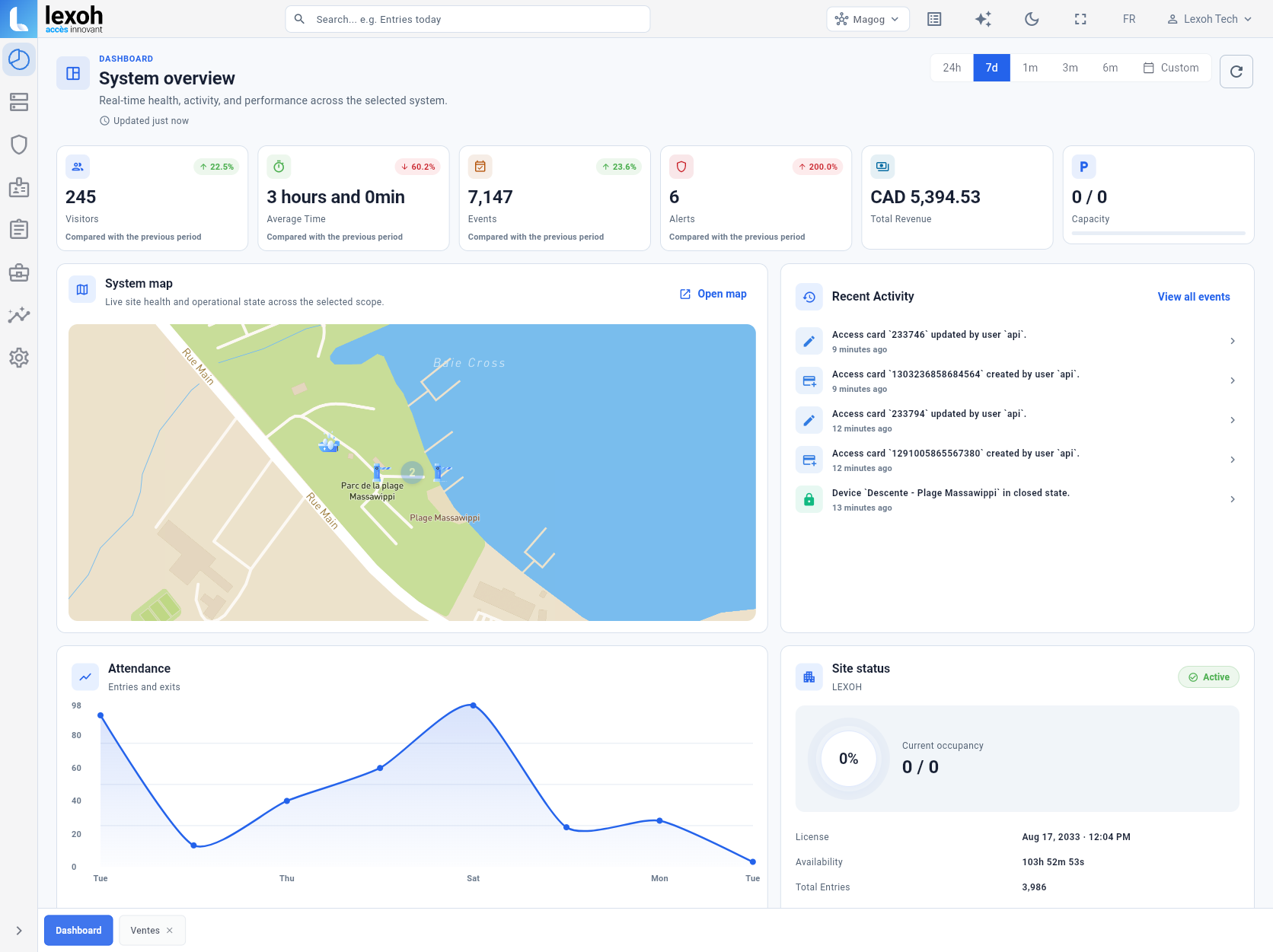
Manage multiple lakes, sites, and rules from one platform.
A network can share selected records and tools while separating the responsibilities, schedules, conditions and operations of each access point.
Operating context
The network begins as an operating agreement
Before technology, partners decide whether wash records are recognized across sites, who administers them, how costs are allocated and who responds to equipment failure.
The platform then expresses that governance through sites, roles, rights and information exchange.
- 01Separated sites
Each access point retains its configuration, equipment and responsible teams.
- 02Deliberate data sharing
The network decides what information can follow a user or watercraft.
- 03Shared view
Authorized teams see the regional picture required by their mandate.
Starting point Regional design
Separate the common foundation from local choices.
The foundation may include shared identifiers, definitions and support procedures. Each site retains items that depend on geometry, operator, schedule or regulation.
- Recognition of status between sites
- Owner and operator by location
- Regional and local roles
- Change and support process
Journey Deployment
Roll out in stages using shared readiness criteria.
A pilot site can test the journey and responsibilities before other locations are added. Readiness covers civil work, equipment, policy, data, training and public communication.
Rules Operations
A local problem remains visible without disrupting the whole network.
Teams see events and states within their mandate. An outage or exception follows the affected site’s procedure, while regional managers receive the view defined in the governance agreement.
FAQ
Questions about the journey
01Must every lake use the same fee?
No. Rules and possible fees can vary. The network still defines how differences are presented and administered.
02Can one subscription cover multiple lakes?
Yes, according to the destinations and rates configured for the network.
03Can a wash record be recognized by several municipalities?
Yes, if the authorities accept it and define conditions, duration and required data. Technology then applies that agreement.
04Who owns the data?
That must be established through governance and applicable agreements; platform access is configured to reflect approved responsibilities.